Digital Sovereignty: Why Companies Are Losing Control of Their Data (and How to Regain It)
Over the past decade, digital transformation pushed organizations to rapidly adopt cloud solutions, Software as a Service (SaaS) platforms, and third-party technology ecosystems. The promise was clear: greater agility, reduced operating costs, and immediate scalability. However, amid this massive migration, many companies overlooked a critical question: Where is our data really located and who has the power to decide over it?
Today, excessive dependence on external providers has created a scenario of vulnerability. Companies are discovering that they are no longer owners of their infrastructure or their most valuable information. This is where Digital Sovereignty comes into play, not only as a technical concept, but as a strategy for business survival and competitiveness.
At Thinker Friends, we have prepared this detailed guide to help you understand why your company may be losing control of its most critical assets and the exact steps you need to take to regain it.
The Illusion of Convenience: The Hidden Cost of Giving Up Control
When an organization builds its digital operations relying exclusively on external infrastructures and platforms, it enters a dynamic of dependence. On the surface, everything works perfectly, but behind the scenes silent risks are brewing:
- Geographic and legal opacity: By hosting data on third-party servers, the information often crosses international borders, becoming subject to foreign legislation that could compromise corporate privacy.
- Vendor Lock-in (Technological lock-in): Many providers design their ecosystems so that entry is economical and simple, but exiting or migrating to a competitor is costly, complex, and technically frustrating.
- Loss of governance: If a provider suffers a security breach, changes its privacy policies overnight, or drastically increases its rates, the client company has no choice but to accept the new rules.
What is Digital Sovereignty?
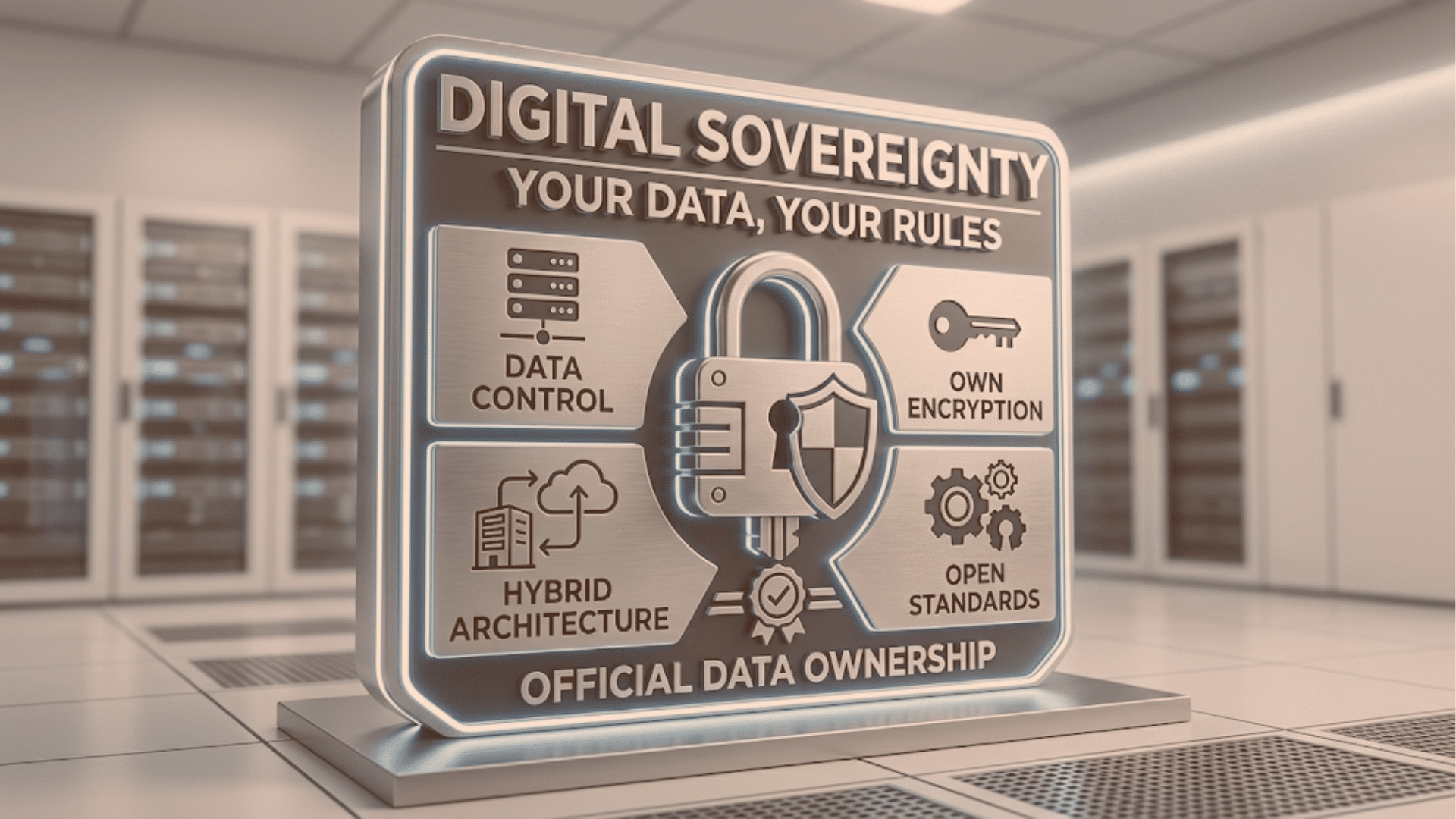
Digital Sovereignty is the ability of an organization to have total control, autonomy, and legal authority over its data, hardware, software, and networks.
It does not mean that you must build your own physical servers from scratch or abandon the cloud. It means designing a technology architecture where you set the rules. It is the ability to audit who accesses your information, move your data freely when you need to, and ensure that your infrastructure responds exclusively to the interests of your business, and not to those of your technology provider.
Why is it a Strategic Priority?
- Protection of Intellectual Property: Your data is the most valuable asset of your company. Losing control over it means losing control over your competitive advantage.
- Regulatory Compliance: With increasingly strict data protection laws, guaranteeing where and how information is stored is an unavoidable legal requirement.
- Operational Resilience: Sovereignty ensures that if an external provider fails or closes, your business can continue operating without fatal interruptions.
Comparison: Technological Dependence vs. Digital Sovereignty
To understand the real impact, let us analyze the operational differences between a traditional dependent model and a model based on digital sovereignty:
| Aspect | Dependence Model (Third Parties) | Digital Sovereignty Model |
|---|---|---|
| Access and Privacy | Controlled by the provider’s policies. | Total control through encryption and own keys. |
| Data Migration | Complex, costly, and subject to closed formats. | Agile, based on open and interoperable standards. |
| Long-Term Costs | Unpredictable, subject to unilateral increases. | Optimized, with flexibility to change providers. |
| Audit and Security | Limited to the reports offered by the provider. | Complete audit, traceability, and internal governance. |
The Roadmap: How to Regain Control of Your Data
Regaining digital sovereignty does not happen overnight, but it is a strategic process that every growth-oriented company must start. At Thinker Friends we recommend following these steps:
1. Data and Infrastructure Audit
The first step to regain control is to know what you are losing. Carry out an exhaustive mapping of all the systems you use. Ask yourself: What SaaS platforms do we use? Where exactly is our customers’ information stored? What would happen if this provider disappeared tomorrow?
2. Adoption of Multicloud and Hybrid Cloud Strategies
Do not put all your data in one basket. Combining local infrastructures (On-Premise) for highly sensitive data with multiple public cloud solutions for everyday operations dilutes the risk of depending on a single technology giant.
3. Prioritize Open Standards (Open Source)
Open source software is the best ally of digital sovereignty. By basing your architecture on open technologies, you avoid vendor lock-in. If a provider is no longer convenient, you can take your code and data to another environment without having to rewrite your entire infrastructure.
4. Data Governance and Encryption
The golden rule of sovereignty is: “If the data is yours, the encryption key must also be yours.” Implement architectures where information travels and is stored encrypted, and make sure that only your internal team holds the access keys. This way, even if the data resides on an external server, no one else will be able to read it.
Take the Reins of Your Company’s Future
The convenience of cloud services should not cost you the autonomy of your business. True digital transformation does not consist of handing over your operations to third parties, but of using technology to strengthen your corporate independence.
At Thinker Friends, we understand that navigating this transition can be a challenge. Our team of experts is ready to help you audit your current infrastructure, design a resilient architecture, and restore to your company absolute control over its data.
Your data, your rules. Contact us today and start building the digital sovereignty your business needs to scale securely.